Your Cholesterol Isn’t the Problem
What your doctor probably isn’t telling you — and what your body is actually trying to say

There’s a a familiar scene that plays out in my world more than I’d like.
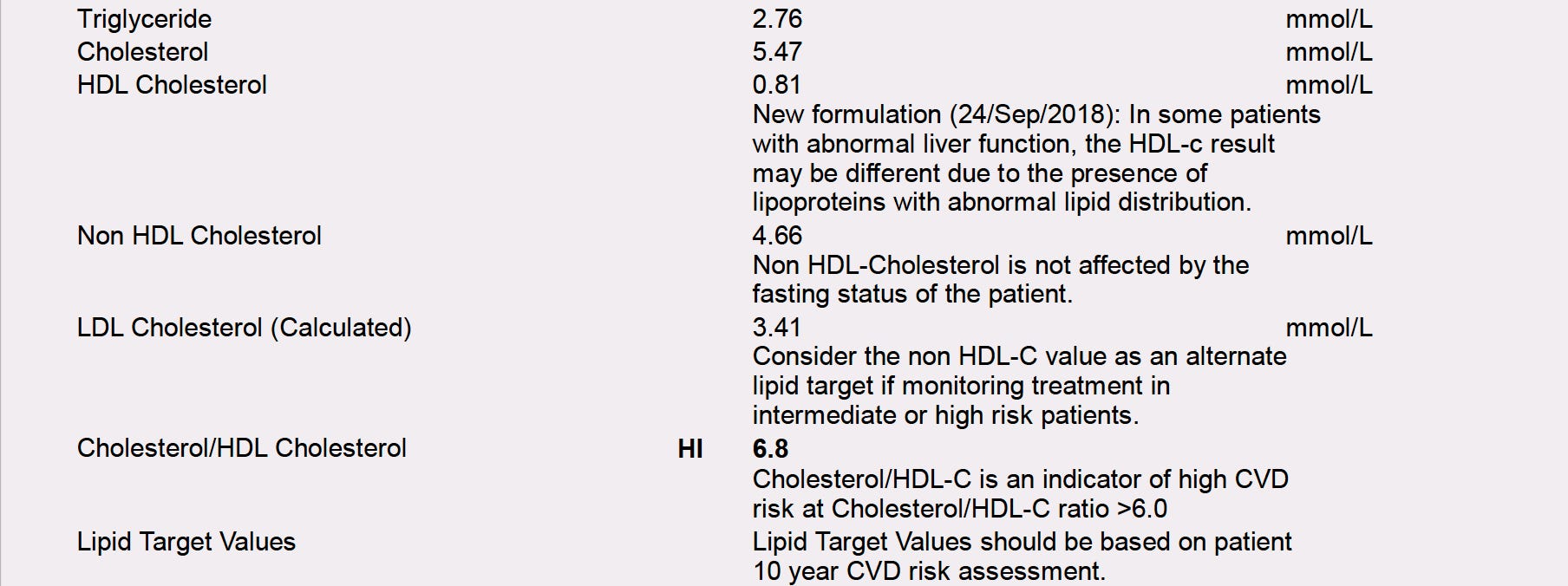
A client gets her bloodwork done. Doctor sees elevated cholesterol. Prescription gets written. She calls me somewhere between confused and defeated, wondering what she did wrong, whether it’s the butter, the eggs, the fact that she hasn’t been perfect with her diet lately.
And then there’s the other version. The woman who comes to me already on statins, has been for years, and quietly asks: “Is there any way I can get off these?”
Both conversations break my heart a little. Not because elevated cholesterol isn’t worth paying attention to, it is. But because in almost every case, the most important question never got asked.
Why is this happening in the first place?
We’ve been telling the wrong story for decades
Eat less fat. Cut the eggs. Lay off the cheese. And if the numbers are still high after that? Here’s a pill.
This is the story most women have been handed. And it’s not just incomplete, it’s sending them in entirely the wrong direction.
Here’s what I want you to understand:
Your body is not deficient in statins.
Cholesterol isn’t a villain that showed up to ruin your life. It’s a response. Your body makes it on purpose. Your brain needs it. Your hormones need it. Your cells use it for repair and protection. Think of it like trucks on a highway, constantly transporting supplies to wherever the body thinks it needs help.
So when I see elevated cholesterol in a client, I’m not thinking “how do we suppress this?”
I’m thinking “why does the body suddenly need so many delivery trucks on the road?”
That’s the more interesting question. And it’s almost always the one nobody’s asking.
What’s actually driving the numbers
When I dig deeper with clients, here’s what I find, almost without exception.
Stress hormones through the roof. Blood sugar swinging all over the place. Poor sleep. Processed carbs. Nervous systems running on cortisol and coffee fumes for fifteen years straight. Chronic under-recovery. A body that has been in survival mode so long it forgot what calm feels like.
That’s what’s driving the cholesterol conversation.
Not the eggs. Not the cheese.
The body is doing exactly what bodies do. It’s adapting, compensating, trying to manage an internal environment that has become increasingly dysregulated. Elevated cholesterol in this context isn’t a malfunction. It’s a signal.
The thing nobody is telling perimenopausal women
Here’s where it gets particularly relevant for those of us navigating midlife, and where I think the conventional medical conversation fails women most completely.
Estrogen plays a significant role in cholesterol metabolism. When estrogen levels are healthy, it helps keep LDL cholesterol in check and supports higher HDL. It’s essentially one of the body’s natural regulatory mechanisms for the whole system.
So what happens in perimenopause and menopause when estrogen begins to decline?
Cholesterol numbers shift. Often noticeably.
Not because something has gone wrong. Not because your diet suddenly got worse. But because the entire hormonal landscape is changing and cholesterol is responding to that change, just doing its job of adapting to a new metabolic reality.
And yet women sit in their doctor’s office, get handed a statin prescription, and leave with absolutely no mention of this context. No conversation about hormones. No acknowledgment that what they’re seeing in their bloodwork might be a completely predictable response to a major biological transition.
Just: here’s a pill. See you in three months.
The reality of your doctor’s toolkit
I want to say something here clearly, because I have genuine respect for the medical system and the people working within it.
Your doctor is not failing you out of negligence or indifference. They are working within a system with real and significant constraints. A doctor’s toolkit is essentially: medication, surgery, or referral to a specialist. That’s genuinely it. They don’t have a 45-minute window to unpack your stress history, your sleep quality, your carb intake, your nervous system patterns, your hormones, your life. They have maybe 10 minutes and a prescription pad.
And because they show up with credentials and a white coat, we believe them. Understandably. We’ve been conditioned to hand our authority over to the person in the room who went to medical school.
Plus — in Canada, it’s “free.” Right?
Except… is it really free if the outcome is a medication you’ll likely be on for the rest of your life? Because that’s often how statins work. You start them, the numbers come down, and you stay on them. Indefinitely.
Whether by design or simply by the structure of modern medicine, the outcome is often the same: what begins as symptom management can slowly turn into a lifetime subscription to a monthly prescription.
The thing worth sitting with
The FDA requires statin manufacturers to list memory loss and confusion on the drug label. Not as a rare outlier. It’s right there in the fine print your doctor probably didn’t read out loud to you.
Your brain holds roughly 25% of your body’s total cholesterol. It needs it for memory, for mood, for signal transmission between neurons. So when we aggressively suppress cholesterol system-wide, it’s a fair and important question to ask what we might be doing to the organ that quite literally runs on it.
I’m not telling you to throw your prescription in the bin. That’s between you and your doctor, and there are absolutely cases where medication is the right call.
But I am telling you:
Ask more questions.
Why is my body doing this? What’s the metabolic and stress load I’ve been carrying? What’s happening with my hormones? What does my blood sugar look like? How is my sleep? What is my nervous system actually doing day to day?
A different way of looking at it
A body with elevated cholesterol isn’t a broken body.
It’s a body trying to recalibrate. Compensate. Adapt. Protect. Get your attention.
The conventional model looks at those numbers and asks: how do we bring them down?
The lens I work from asks: what is this body trying to tell us, and what does it actually need?
Very different question. Very different starting point. Very different outcomes.
If you’re in midlife and you’ve had this conversation with your doctor recently or you’ve been on statins for years and something in you has always quietly wondered, I want you to know that the question you’ve been sitting with is worth following.
Your body is not broken. It’s communicating.
And learning to listen to it, really listen, is where everything changes.
Has this been your experience? Have you navigated the cholesterol conversation with your doctor and felt like something was missing? I’d love to hear in the comments. This is one of the topics I find women have something to say about once someone opens the door.
And if you’re ready to go deeper on what your body might actually be communicating — the hormones, the metabolism, the nervous system, all of it — this is exactly the work I do with clients. You’re welcome to reach out.